GET/en/blog/venue-reel-anatomy/200← Journal
Anatomy of a venue reel: from the first second to the cover
The hero, the first second, shot language, FPV, light, rhythm, sound, colour, safe zones and the cover: the creative decisions behind a single venue reel.
Our archive holds 745 reels from 718 shoot days. A good venue reel is not luck; it is the sum of many small decisions. We covered the logistics of a shoot day in another post. This one is about the creative side.
Who is the hero?
Every reel has a hero: a dish, the hands that make it, or the room itself. With croissants straight out of the oven, it is the crackle of the crust.
Choosing the hero also means choosing what steps back. If staff in white coats, a bright window or a crowded table compete with the hero, they either leave the frame or get pushed back with light and colour.
The first second
Viewers decide in the first second, so the first frame is never a logo, a distant exterior or an empty dining room. We open in the middle of the action: the knife going into a slice of San Sebastian cheesecake, the door swinging open as the camera glides in. The first frame raises a question, and the rest of the reel answers it.
Shot language: close, texture, movement
A reel that introduces a venue is a sequence of a few kinds of shots:
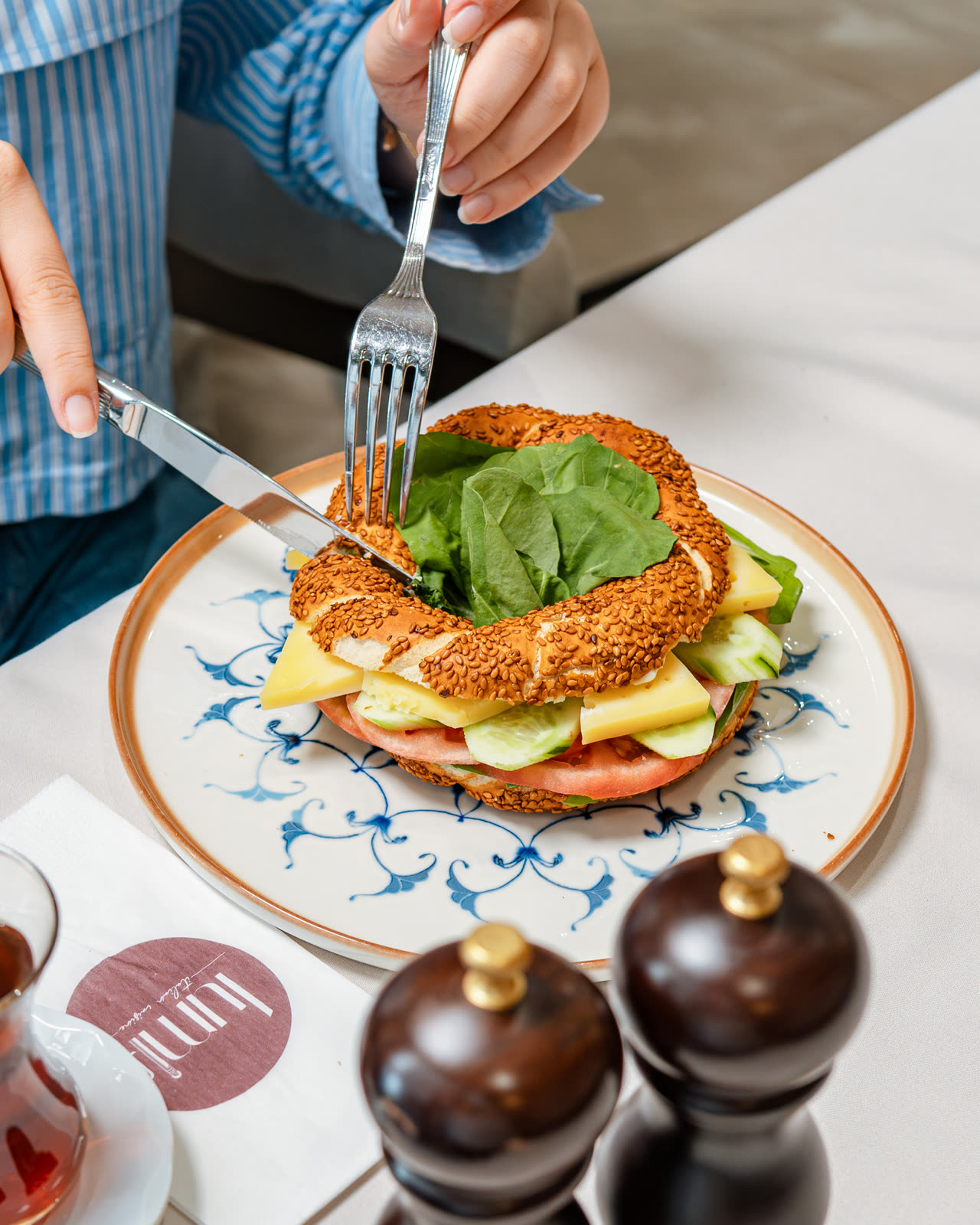
- Macro: sesame seeds, a crust, the shine of a sauce, the cross-section of a slice. This is where texture comes through.
- Steam: it shows when light comes from behind or the side, and disappears when lit from the front.
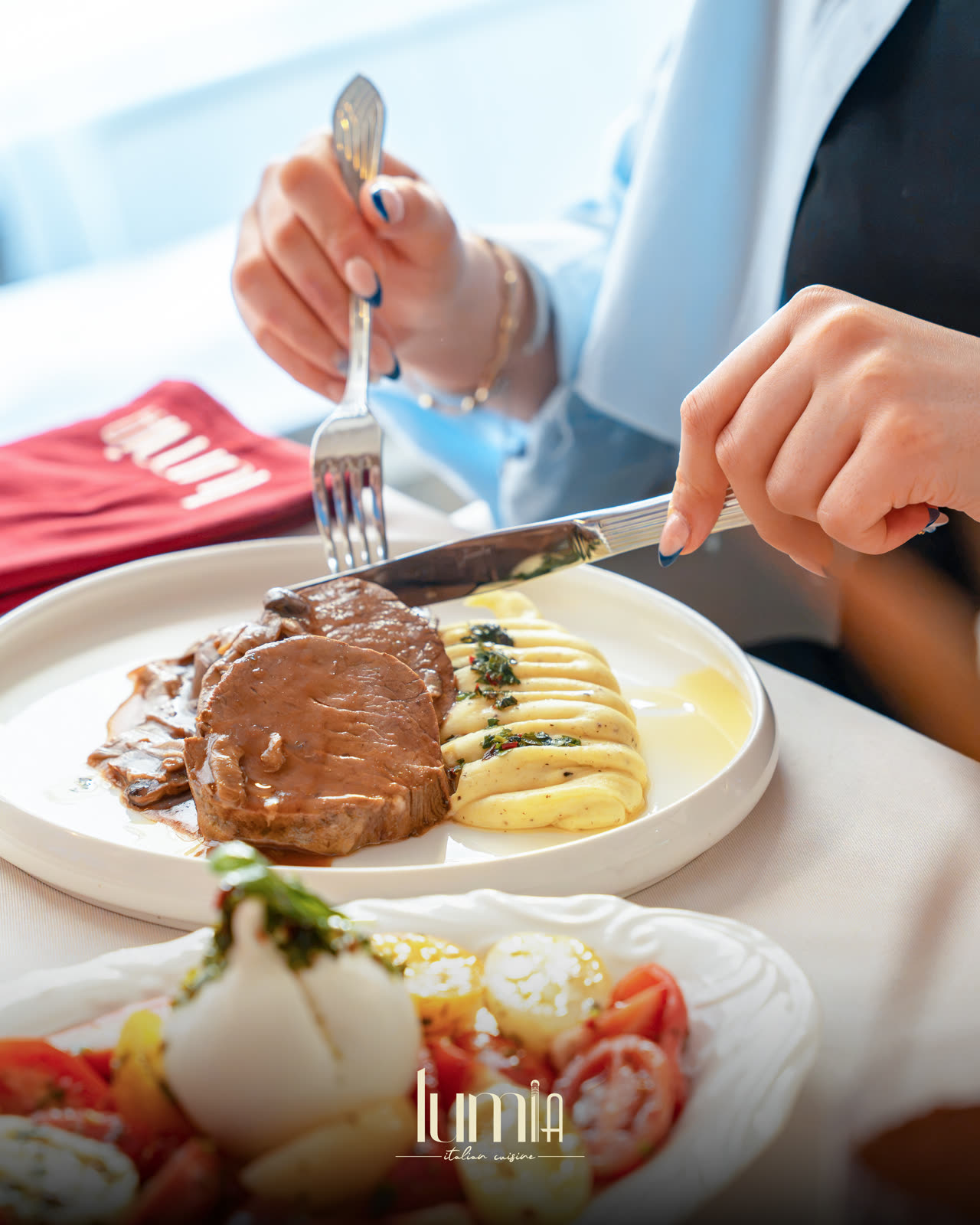
- Hands: hands that prepare, serve and cut give the product scale and warmth.
- Movement through the space: shots that slide between tables or come in through the door. This is where the feeling of being there comes from.
Close-ups go on a tripod or a gimbal. In the edit we check every shot for camera shake; the problem is often in the first or last half-second of the take, so that is where we trim first.
One take: from the façade into the room
An effective way to show a venue in a single breath is an uninterrupted FPV flight that starts outside and ends inside. With a DJI Avata 2 we approach the façade, fly through the door, cross the room and stop above a laid table.
It is never improvised: we walk the route first, keep the doors open and let everyone in the room know the pass is coming. We fly with built-in stabilisation on and digital zoom off, and the cleanest run goes into the edit.
Light and shutter
In daytime the best light usually comes through a window. We place the plate side-on to it, because side light brings out texture. In the evening, the chandeliers, wall lamps and signage are part of the scene.
We shoot most shots at 50p with a 1/100 s shutter. Natural motion blur hides micro-shake, and a 25p delivery keeps room for smooth slow motion.
Rhythm and sound
We pick the music early in the edit, because it sets the rhythm. Cuts land on the beats and on clear accents in the track.
Sound is half the picture. A crust cracking, a knife against a plate, the sizzle of a pan: these keep a reel alive. The venue’s ambient sound fills the gaps between cuts. The music sits under all of it, and under the voice-over if there is one. At delivery we aim for about −14 LUFS, a level that neither shouts over nor disappears under the rest of the feed.
Colour: editable layers
We build the grade as separate, labelled layers: white balance and exposure, contrast, the camera transform, the hero, the background, final saturation. We never bake the whole look into a single LUT; anyone on the team can open the project and change each step.
In food shots the plate comes forward while coats and bright walls behind it are pulled down. In an interview, skin stays natural. The brand’s colours must look right every time. Drone footage needs care: for DJI’s D-Log M profile, the ready-made transforms in editing software can over-saturate. We use DJI’s own transform and test it on sky-heavy shots first.
The blind spots of a vertical frame
In a 1080×1920 frame, the Instagram interface covers roughly the top 220 pixels, the bottom 320–400 pixels and about 120 pixels on the right. Titles, logos and subtitles stay out of those zones.
The cover: the reel’s poster
The cover (we call it the kapak) is the reel’s poster on the profile grid: the reel’s strongest frame, or a separate photo from the same day. The grid crops the edges, so the subject sits in the centre and any text stays readable at a small size. The cover file carries exactly the same name as the reel, so the two never lose each other in the archive.
Before it goes live
- Is there movement in the first second, and is the hero clear?
- Are any shaky shots left?
- Is all text inside the safe zone?
- Is there an audio track, at around −14 LUFS?
- Is the file 1080×1920, yuv420p, with +faststart?
- Is the cover ready, with the same name as the reel?
We show how these decisions come together in a real venue in the Petro and Lemon’s case studies. If you’d like to plan a reel for your venue, get in touch.