GET/en/blog/multilingual-site-gulf-guests/200← Journal
Why a Trabzon venue needs a site in Arabic, English and Russian
Most of Trabzon's foreign guests come from the Gulf. Why a venue there needs a multilingual website, and what a good one has to get right.
Trabzon, on Turkey’s eastern Black Sea coast, hosted about 808,000 foreign overnight guests in 2025, up 14% on the year before. Some 77% of them came from the Gulf and the wider Middle East, and Saudi Arabia alone sent more than 442,000. Yet many of the city’s restaurants, cafés and hotels still have a Turkish-only website, and some have no website at all.
What the numbers say
- About 1.45 million people stayed overnight in Trabzon in 2025; 808,000 of them were foreign guests.
- Saudi Arabia, Oman and Iraq lead the list, followed by Jordan, Kuwait, the UAE, Iran, Georgia, Russia and Bahrain.
- In January–August 2026, about 623,000 foreign guests stayed in the city. Saudi guests passed 346,000, and visitors from Uzbekistan doubled.
- Uzungöl, the lake resort in the Trabzon highlands, welcomed 4.3 million visitors in 2025, 71% more than in 2024.
Air links are growing too. In summer 2026 Pegasus launched flights from Trabzon to Jeddah, Kuwait and Medina, and flyadeal’s Dammam, Gassim, Jeddah and Riyadh services are now also sold under the Saudia code. After Mohamed Salah joined Trabzonspor, flights from Cairo to Trabzon started in August 2026, putting the city on the map for a new Arabic-speaking audience.
There are risks as well. After the attacks on Iran at the end of February 2026, Gulf flights were suspended for a while, and by the end of June international passenger numbers at Trabzon airport were 18% below the previous year. By the end of August the gap had closed to 1%. To avoid depending on a single market, venues should also think about guests from Iraq, Egypt, Uzbekistan and Georgia. That is where English and Russian come in.
Where guests look for you
In a 2026 Simon-Kucher study, 54% of foreign visitors to Turkey said social media influenced their choice of destination. A reel catches the eye. After that, guests want to see the menu, the address and whether you are open right now, in their own language. Your website is where that happens.
What a good multilingual site needs
- Real translation. No machine translation should go live. Arabic and Russian copy should be read by native speakers, and dish names need special care.
- A proper right-to-left layout for Arabic. Not just the text: menus, arrows, cards and galleries should mirror too, with fonts chosen for Arabic script.
- A searchable menu. Guests should be able to type a dish in their own language and find it. Alcohol-free drinks and halal information should be stated clearly.
- WhatsApp contact. About 89% of internet users in Turkey use WhatsApp every month (DataReportal, data from October 2025). One tap should open a message for questions or bookings, in the guest’s language.
- Open or closed status. Opening hours in Istanbul time, with a clear “open now”.
- Fast on mobile. The first visit should load only what it needs; videos should play only when they scroll into view.
- No tracking cookies by default. A good site works without analytics or ad cookies. Even the map can load only when someone taps it.
- Safe payment. If there is a booking or deposit, card details are entered on the payment provider’s hosted 3-D Secure page. The site never stores card data.
An example: Boi Coffee & Bakery
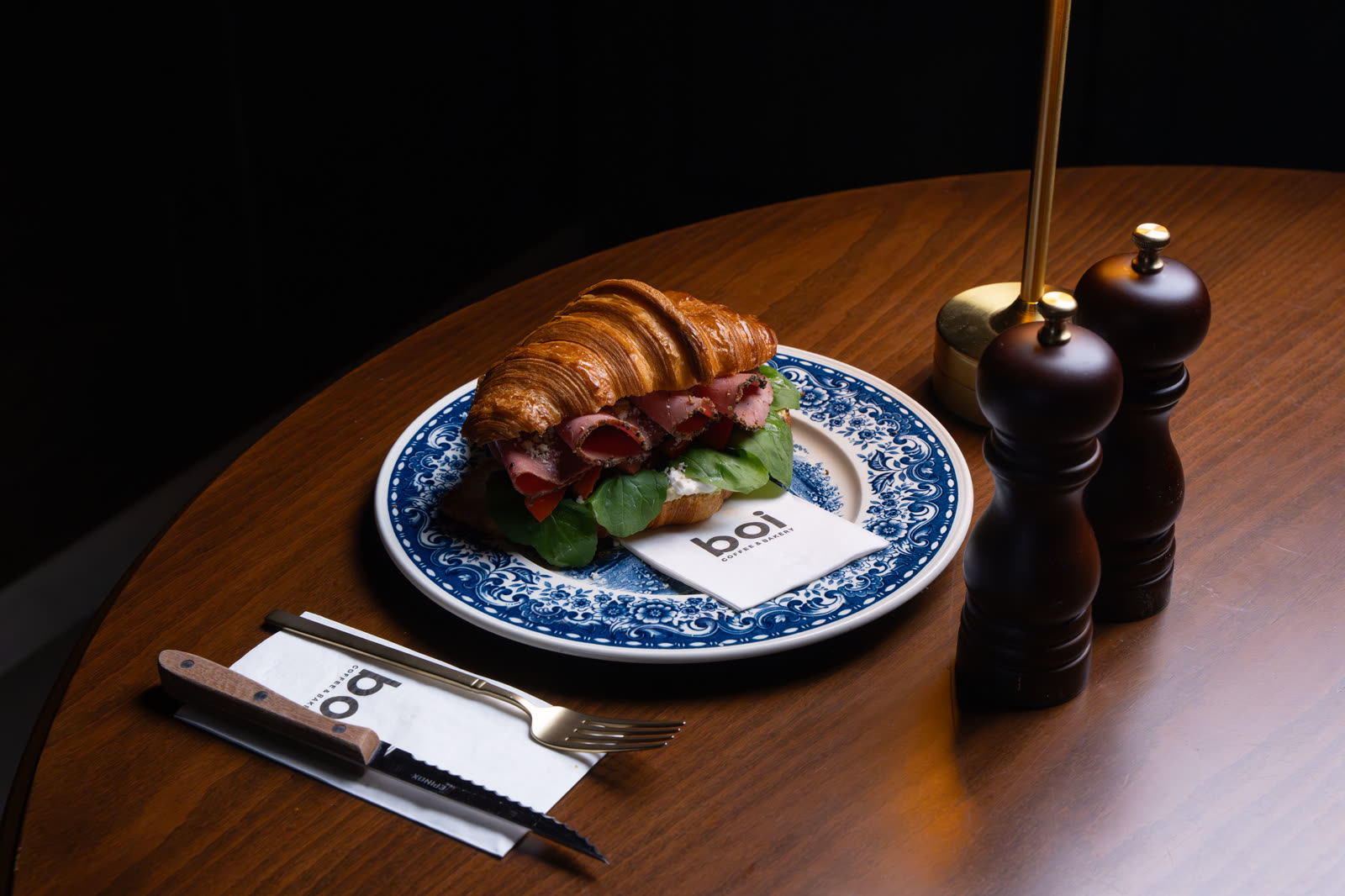
In September 2026 we built a Turkish, English, Arabic and Russian website for our client Boi Coffee & Bakery in Trabzon. It has a searchable menu of 188 items in 23 categories, and search works regardless of accents or Turkish characters. The Arabic version is fully right-to-left. The visit page highlights today’s opening hours in Istanbul time and helps guests compose a WhatsApp message. The site uses no cookies and no analytics.
A small but telling detail: every translation tool “corrected” the café’s own “Sneakers Kek” to “Snickers”. The venue’s own name for its cake had to be kept in every language. Real translation is about exactly this kind of detail.
The site is preparing to go live; the domain has not been set yet. Native-speaker proofreading of the Arabic and Russian texts is planned before launch.
A reel brings the guest to the door. A menu in their own language opens it.
When to start
Gulf families start planning their summer holidays in winter. Having Arabic content and a working site live between February and April means entering the June–August season ready.
If you’d like to talk about a multilingual site for your venue, get in touch.